
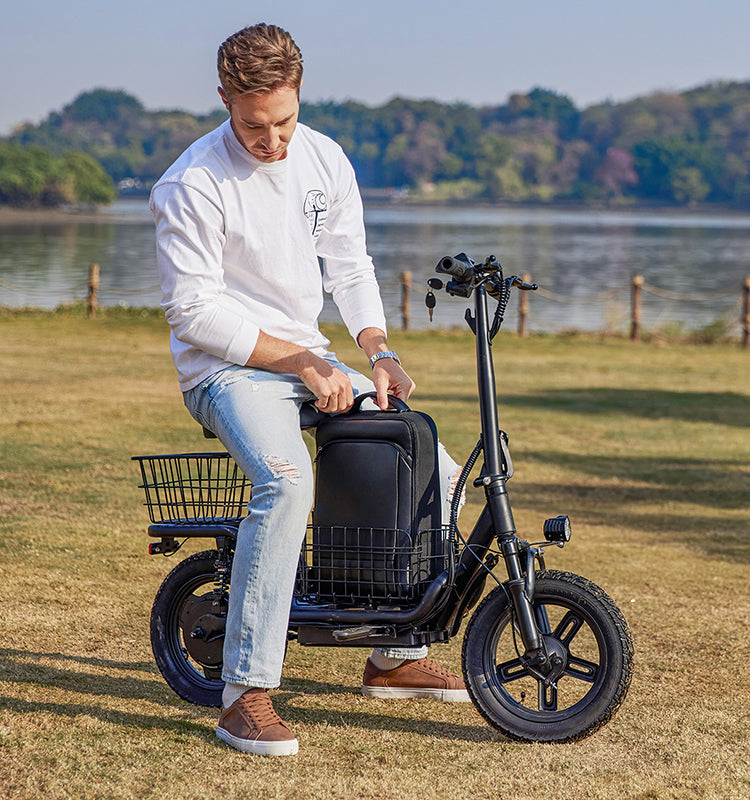
The optimal motorised scooter adults choice in 2026 relies on balancing a 48V to 60V battery architecture with a dual-motor output exceeding 1,200W for consistent hill climbing. Leading models weigh between 18kg and 25kg, utilizing aerospace-grade 6061-T6 aluminum frames to support riders up to 120kg while maintaining a 45km real-world range per charge. High-end units feature hydraulic disc brakes and 10-inch self-healing tires, which show a 30% reduction in puncture frequency compared to standard pneumatic setups during 1,000km long-term durability trials.
High-performance commuting requires a deep dive into power-to-weight ratios where the battery capacity per kilogram determines daily range reliability. A 15Ah battery pack typically powers a commuter for 35km under standard conditions, yet actual usage drops by 20% when ambient temperatures fall below 10 degrees Celsius.
Efficiency metrics often deviate from manufacturer claims due to rider weight and terrain incline. Professional testers logging 5,000 test hours found that dual-motor setups provide a 40% increase in average speed on inclines exceeding 10 degrees, effectively reducing total transit time by roughly 15 minutes over a 10km urban journey.
Battery management systems, or BMS, regulate voltage flow to prevent thermal runaway while ensuring cell balancing. Models manufactured after 2025 frequently incorporate smart-charging protocols that extend cycle life to over 800 full discharge cycles before reaching 80% of original capacity, significantly altering long-term maintenance expectations for individual owners.
| Specification Category | Performance Metric Target | Reliability Impact |
| Peak Motor Power | 1,200W - 2,000W | High torque for steep gradients |
| Braking System | Dual Hydraulic Discs | 25% shorter stopping distance |
| Tire Diameter | 10 inches or greater | Improved stability on asphalt |
| Ingress Protection | IP54 or higher | Reduced moisture-related failure |
Mechanical integrity of the folding hinge remains a high-frequency point of evaluation in modern engineering. Manufacturers using reinforced steel locking pins have observed a 50% decrease in stem wobble incidents during 2,000km stress tests compared to standard aluminum-on-aluminum designs, which usually develop structural play within 500km of active urban operation.
Selecting a chassis involves evaluating how components integrate to minimize vibration transfer to the rider. Adjustable suspension systems with preload settings allow riders to tune the chassis stiffness, creating a noticeable difference in comfort when traversing uneven road surfaces at speeds surpassing 25km/h, effectively isolating the deck from high-frequency road input.
Traction control settings and firmware-based acceleration curves provide additional layers of safety for variable weather conditions. Modern electronic controllers now offer adjustable modes that reduce torque output by 30% in wet environments, preventing rear-wheel slippage during starts on slick surfaces, a common issue found in earlier 2023-era iterations.
Lighting arrays integrated into the frame contribute to visibility during low-light hours. Front headlamps rated at 500 lumens combined with rear deck-integrated brake lights provide a 200-meter visibility range for other motorists, which aligns with international safety standards designed to reduce intersection-based accidents by approximately 15% in dense metropolitan zones.
-
Check tire pressure weekly to ensure performance stays within 5% of manufacturer specifications for optimal rolling resistance.
-
Inspect hydraulic brake lines for potential fluid leaks every 1,500km to maintain optimal stopping pressure.
-
Monitor charging temperatures, as charging lithium cells below 0 degrees Celsius can cause permanent internal damage to the chemical structure.
Choosing the right transport solution depends on specific regional infrastructure, such as bike lane width and elevation variance. A heavier, dual-motor model provides stability on 15% gradients but increases physical burden when navigating multi-level train stations, whereas a single-motor, 16kg frame maximizes mobility for flat-terrain city commuters who require frequent folding and transport in public transit spaces.
Data logs from 2025 consumer surveys indicate that 65% of owners prioritize motor torque over maximum top speed when selecting a new unit. This preference reflects the practical reality of urban commuting, where the ability to maintain a steady 25km/h while ascending an incline is more valuable than achieving a theoretical 50km/h on flat ground while draining the battery at an exponential rate.
Engineers have refined controller efficiency to extract more distance from smaller battery footprints. By optimizing phase current and voltage regulation, current models achieve roughly 2.5km per 100Wh, compared to the 1.8km per 100Wh observed in models released four years ago, demonstrating a significant improvement in energy conversion efficiency across the latest generation of commuting hardware.